
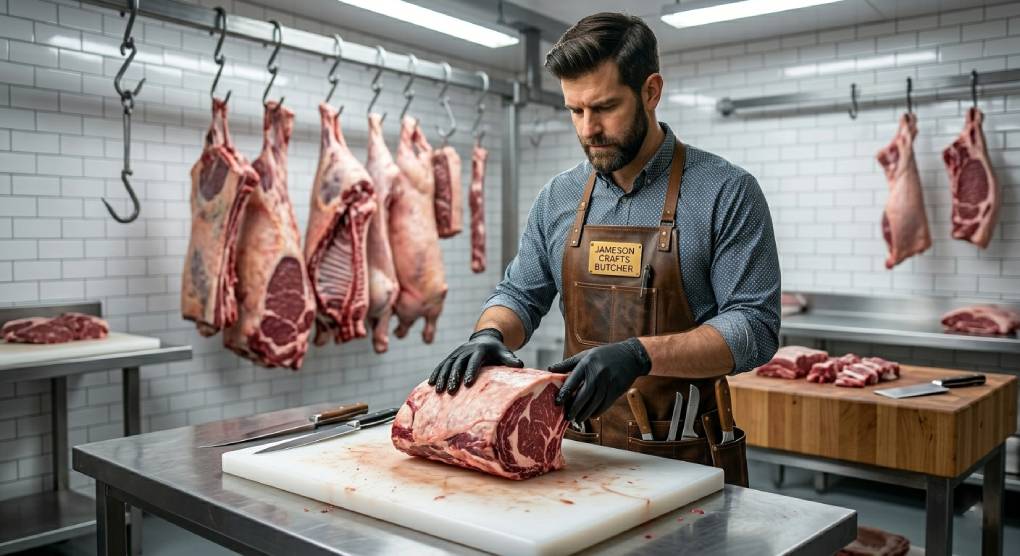
Best Leather Aprons for Butchers and Meat Work
A butcher's apron is not workwear in the way a chef's apron is workwear. It is closer to personal protective equipment. The knives are long, heavy, and kept sharp. The work involves sustained pressure, quick strokes, and frequent repositioning of blades at close range to your body. The environment is wet, cold, and often slippery underfoot. The pace in a busy shop or processing facility does not allow for careful, slow movements.
What you wear in front of all that matters.
This article covers what actually differentiates a good leather butcher apron from a poor one, the protection it offers against blade contact and splatter, the hygiene considerations that matter in a food-handling environment, how to maintain it correctly, and how to choose the right one for the specific demands of your work.
Why professional butchers choose leather
Most butchers working at a serious level, in a traditional shop, a supermarket meat department, a wholesale processing facility, or a specialty abattoir, have arrived at leather through experience with the alternatives. The reasoning is consistent across trades.
Blade and puncture resistance
The single most important property of a butcher's apron is its ability to resist an accidental blade contact. Not because accidents are common, skilled butchers work safely, but because they happen, and when they do, the apron is the last line of defense between the blade and your body.
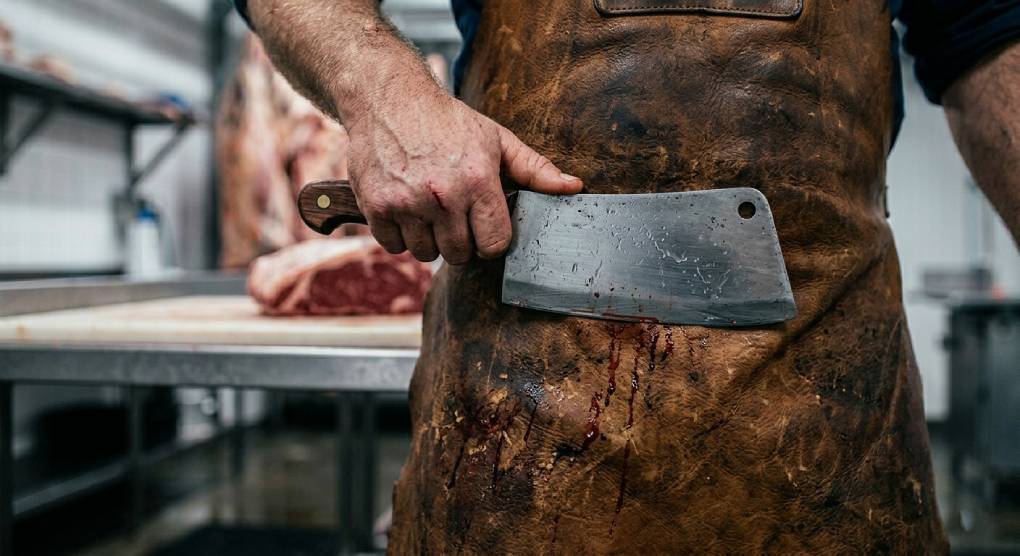
Cowhide leather at 1.2mm to 1.6mm thickness is significantly more resistant to cutting and puncture than rubber, PVC, canvas, or synthetic fabrics. The dense fibrous structure of the outer hide layer resists the sliding friction of a blade in a way that softer materials cannot. It will not stop every knife impact at every angle, and it is not marketed as cut-proof, but it absorbs and redirects force in a way that meaningfully reduces the severity of incidental contact.
Fabric aprons offer almost no meaningful cut resistance. PVC and rubber are more durable than fabric, but they split under the sustained friction of repeated blade contact across the front of the apron, and they degrade in cold environments, which is exactly where much of the heaviest butchery work happens.
For meat processing work involving heavy cleavers and bone saws, the apron also needs to handle impact and abrasion from bone fragments and off-cuts. Cowhide absorbs this without tearing, cracking, or splitting.
Blood and fluid resistance
A butcher's apron takes a considerable amount of blood, fat, and tissue fluid across a working shift. What matters is not just immediate repulsion but long-term absorption behavior, because an apron that absorbs fluids retains them in its fibers, creating an odor and contamination problem that cannot be solved by surface wiping.
Cowhide leather has a tight, closed-pore surface structure that resists deep fluid absorption. Blood and fat sit at the surface and can be wiped away cleanly. Even after repeated heavy exposure, a leather apron that is maintained properly does not develop the embedded odor that a fabric apron absorbs within weeks.
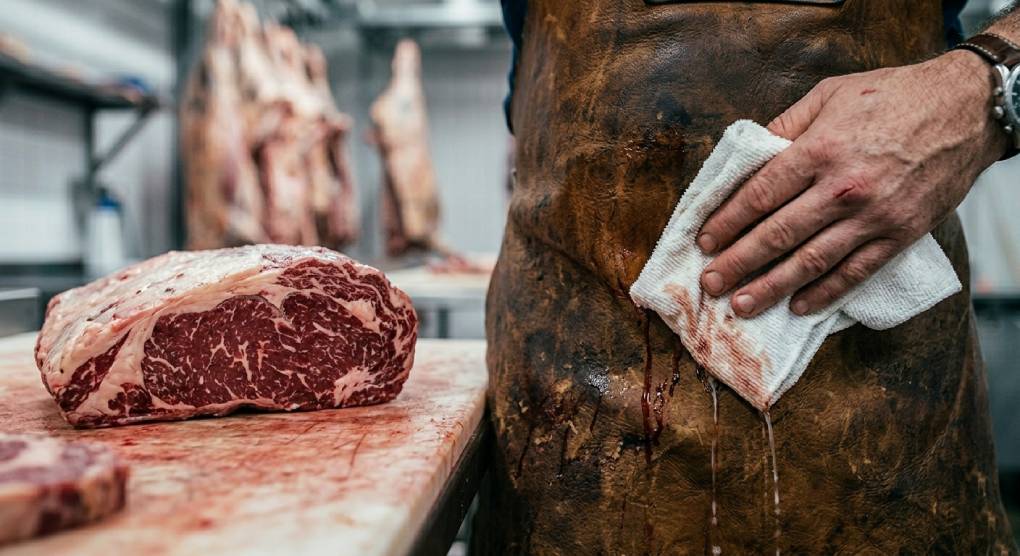
This matters for hygiene, but it also matters for the working environment. Butchers spend long hours in cold rooms and at cutting tables. An apron that stays clean and dry to the touch, rather than soaking progressively through a shift, is a meaningfully more comfortable one to wear.
Cold environment performance
Much of professional butchery happens in refrigerated spaces, cold rooms, cutting rooms maintained at 2–4°C, and walk-in freezers during stock rotation. In these environments, rubber and PVC stiffen significantly. A rubber apron at refrigerator temperature becomes noticeably rigid and restricts movement in a way that the same apron at room temperature does not.
Leather does not behave this way. Properly conditioned cowhide remains flexible and supple across a wide temperature range. It does not stiffen in the cold, crack at flex points, or restrict the arm and torso movement that controlled knife work requires.
Longevity that makes financial sense
Rubber and heavy PVC aprons in daily professional use last roughly one to two years before they begin to degrade, surface cracking, strap failure, splits at stress points. A cotton or canvas apron in a butcher environment lasts weeks before it is saturated with staining that cannot be removed.
A cowhide leather apron, properly maintained, lasts five to ten years in the same conditions. The per-year cost of a $150–$275 leather apron worn for a decade is lower than replacing a cheaper apron every twelve to eighteen months. For shop owners equipping a team, this arithmetic is significant.
Hygiene, the part most apron guides skip
Hygiene in a food-handling environment is not optional, and apron hygiene is part of that compliance picture. Here is what actually matters when you are working with raw meat every day.
Surface wiping is not enough on its own
A leather apron can be wiped clean between tasks and at the end of a shift, and this handles the majority of surface contamination. But for aprons used in environments with regulatory hygiene requirements, HACCP-compliant butcher shops, commercial processing facilities, food service operations, surface wiping needs to be part of a more complete routine.
The key issue is that leather is an organic material. While its surface resists absorption, cuts, scratches, and worn areas on the apron surface can harbor bacteria if they are not addressed. Deep scratches in the leather from blade contact are the main risk area. These should be inspected regularly and treated with a leather conditioner that fills and seals surface damage.
A practical daily hygiene routine
At the end of each shift:
- Wipe the apron down with a clean cloth dampened with lukewarm water and a small amount of mild soap. Work across the entire front surface, not just visibly soiled areas.
- Rinse with a clean damp cloth to remove soap residue.
- Pat dry with a clean towel and hang to air-dry in a ventilated area, not in a closed locker or folded while damp.
- If the apron was in heavy use, carcass work, bone-saw use, heavy blood exposure, follow with a food-safe sanitizing solution approved for use on leather or non-porous surfaces. Check the product specification; some sanitizers are too alkaline for regular leather use and will dry it out over time.
Weekly conditioning
Leather that is cleaned daily without conditioning dries out. Dried leather cracks at flex points, the areas that bend when you move, and cracked leather is harder to clean and more likely to harbor contamination. A weekly application of a leather conditioner (one that is compatible with food contact environments if your regulatory setting requires it) keeps the apron surface closed, supple, and cleanable.
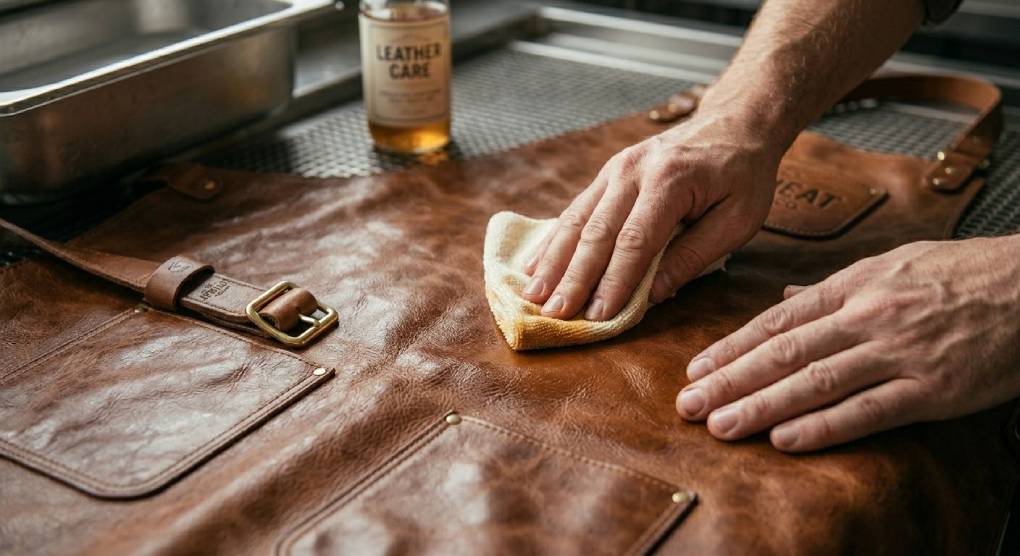
Some professional butchers condition the apron two to three times per week during heavy use periods. This is reasonable and errs on the right side.
Replacing a damaged apron
No leather apron lasts indefinitely in a professional butchery environment. The decision point for replacement is when the leather has sustained enough surface damage, deep cuts, cracked areas, permanent staining in recessed damage, that it can no longer be reliably cleaned to the required standard. For most professional operations, this means inspecting the apron monthly and replacing it when surface integrity is compromised, regardless of structural strength. An apron that is structurally sound but hygienically compromised needs to be replaced.
What to look for when buying a leather butcher apron
1. Leather thickness and grade
For butchery, the minimum viable leather thickness is 1.2mm. Thinner than this and the apron lacks the body and resistance that the work demands. The optimal range for professional use is 1.2mm to 1.6mm, thick enough for meaningful protection and durability, flexible enough not to restrict movement during extended cutting work.
All Lapron butcher aprons are made from 100% genuine cowhide within this thickness range. For more on leather grades and what the terminology means in practice, see Full-Grain vs Top-Grain Leather: What Lapron Uses.
2. Full-bib coverage, non-negotiable
For butchery work involving knives, cleavers, and bone saws, a waist apron is not adequate. You need a full bib that covers from the chest to at least the knee. The majority of serious blade incidents in a butchery environment involve the torso and upper legs, the areas closest to the work surface and the direction of knife travel.
A full-length bib also protects against splatter during breaking down cuts and portioning, the moments when blood and fat travel upward as well as forward.
3. Strap system, strength and adjustability
The straps on a butcher's apron take considerable weight and stress. A full-length cowhide apron is not light, and the pockets, if loaded with a steel, a second knife, or portion bags, add to that. Plastic hardware is not adequate for this application.
Look for:
- Solid brass or heavy-gauge steel buckles at every adjustment point
- Cross-back (H-back) straps that distribute weight across both shoulders rather than loading a single neck strap
- Waist ties or a waist buckle that cinches the apron close to the body, a loose-hanging apron swings during work and is harder to control
Cross-back straps are particularly important for butchers who work long shifts. Neck-strap aprons create cumulative strain at the back of the neck over a full day of leaning forward over a cutting block or hanging rail.
4. Pocket placement and content
Not all butcher aprons need multiple pockets. Many professional butchers prefer a clean front surface with no pockets, fewer places for contamination to accumulate, and simpler to wipe down completely. If your hygiene requirements are strict, consider this before buying a heavily pocketed design.
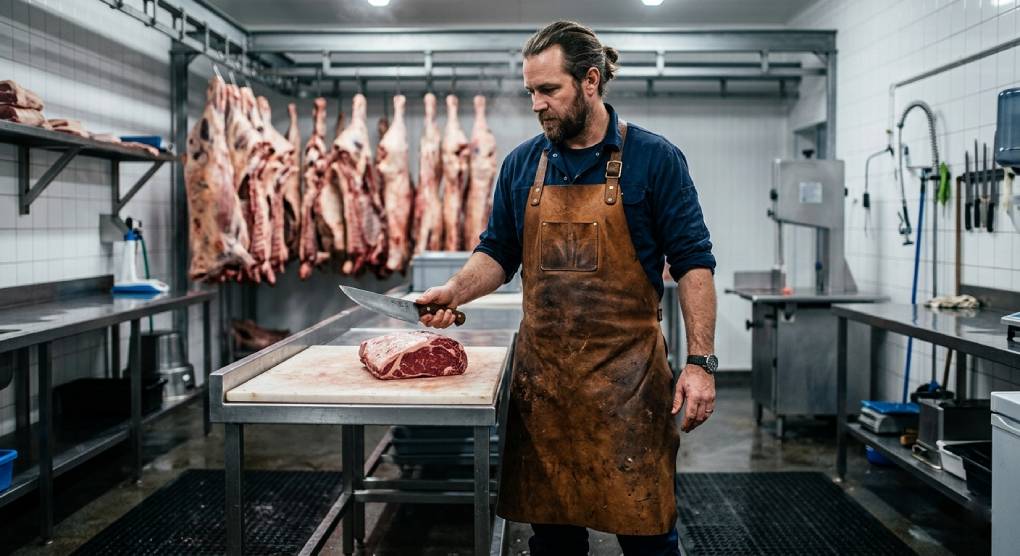
For butchers who do carry tools in the apron, a sharpening steel, a second knife, a portion scale pen, a thermometer, look for pockets that are:
- Deep enough that nothing protrudes above the pocket edge during work (a protruding steel handle is a hazard in close-quarter cutting work)
- Positioned at the side or lower front, away from the main work area directly in front of the cutting block
- Easily wipeable; avoid pockets with internal lining that cannot be cleaned as easily as the outer leather
5. color and finish
Brown and tan cowhide aprons are the traditional choice for butchery work. They mask surface discoloration from blood and fat better than lighter colors, and they develop a patina over time that reflects the character of the work.
Lapron's Prime Cut is made in red leather, a distinctive choice that offers the same practical properties as brown cowhide and looks striking in a modern or artisan butcher shop context. For shops that want a strong visual identity, a red or black leather apron communicates that intention clearly.
Full bib vs half apron for different butchery tasks
Different stages of butchery work have different requirements, and some butchers maintain both a full-bib and a half-apron for different tasks in the same shift.
Full bib apron: Best for: carcass breakdown, primal and sub-primal cuts, bone-saw work, any task where the knife is working at torso height or above, and high-splatter environments (blood, fat, rinse water). This is the apron for the majority of serious butchery work.
Half apron (waist down): Better suited for: counter service and customer-facing tasks, light portioning work, cold room stock rotation, and tasks where freedom of upper body movement is prioritized over coverage. Some butchers switch to a half apron for the final stage of their shift when they are working the retail counter rather than the cutting room.
If you buy one apron, buy a full bib. Add the half apron later if you find yourself regularly switching contexts.
Lapron's leather butcher apron collection
Lapron makes seven leather butcher aprons, all made from 100% genuine cowhide at 1.2–1.6mm thickness with solid brass hardware. All are available with custom laser engraving for shop branding or personal use.
Chop Craft Butcher Apron, $145–$205
The most practical entry point in the range. Full bib coverage, 1.2–1.6mm cowhide, brass accents, adjustable straps, and spacious pockets. Eight customer reviews. An honest, capable working apron for butchers starting or equipping a team on a reasonable budget.
Grill Gladiator Leather Butchery Apron, $158–$238
Built for both butchery and grilling work. Full front coverage, cross-back adjustable straps. A versatile choice for butchers who also do preparation work around live fire, a smokehouse, a competition BBQ setup, or a grill station. Four customer reviews.
Brisket Boss Butcher Apron, $169–$239
Premium brown cowhide with a full bib cut and brass detailing. One of the two most reviewed aprons in the collection, seven customer reviews, and a consistently popular choice for professional butchers and serious home processors. Classic brown finish that ages well with regular use.
Meat Master Butcher Apron, $168–$229
Full professional coverage with a well-considered pocket layout. Designed specifically for butchery work rather than adapted from another category. Six customer reviews. The balance of practical pocket placement and full-body coverage makes it a strong choice for cutting room work.
Meat Artisan Butcher Apron, $225–$307
Traditional craftsmanship in a modern cut. 100% cowhide with sturdy brass accents throughout. Full bib length and a clean-front design that makes it easier to wipe down completely between tasks, a practical choice for butchers with strict hygiene requirements. Seven customer reviews.
Slice Savvy Butcher Apron, $255–$316
Heavy-duty cowhide reinforced at every stress point. Built for high-volume professional environments where the apron is worn every working day and needs to outlast the lighter options. Brass reinforcement throughout. Seven customer reviews. The choice for experienced butchers who have worn through cheaper options.
Red Prime Cut Butcher Apron, $275–$339
The flagship in the range. The same premium cowhide construction as the Slice Savvy, in a distinctive red finish. Engineered specifically for demanding professional environments. Six customer reviews. For butchers and shop owners who want the best-performing apron in the collection, with a strong visual identity to match.
Choosing the right one
|
Your situation |
Recommended apron |
Price from |
|
Starting out, first leather apron |
Chop Craft |
$145 |
|
Butchery and live-fire grilling |
Grill Gladiator |
$158 |
|
Daily professional cutting room use |
Brisket Boss or Meat Master |
$168 |
|
Strict hygiene requirements, clean-front preference |
Meat Artisan |
$225 |
|
High-volume, all-day professional use |
Slice Savvy |
$255 |
|
Shop owner, flagship workwear |
Red Prime Cut |
$275 |
For custom engraving, your name, your shop name, or a logo on the front, visit the Personalize page for options and turnaround times.
If you are unsure which suits your specific setup, email support@leatherapron.shop and we will point you in the right direction.
A note on care and longevity
The single most common reason a leather butcher apron fails before its time is neglect of conditioning. Daily cleaning removes the natural oils from the leather surface over time. Without regular conditioning, the leather stiffens and eventually cracks at flex points, the bends at the waist, around the armholes, and at strap attachment points.
A leather conditioner applied once or twice a week to an apron in daily professional use adds fifteen minutes to your maintenance routine and several years to the apron's working life. It also keeps the surface closed and smooth, which is directly relevant to its hygiene performance.
For a detailed cleaning and conditioning guide, see Cleaning and Caring for a Leather Apron.
The case for buying once
The economics of a leather butcher apron in professional use are straightforward. At current prices, a professional butcher replacing a fabric or rubber apron annually spends $40–$80 per year on workwear for an item that offers minimal cut resistance, poor odor management, and no meaningful longevity.
A Lapron leather butcher apron in the $145–$275 range, maintained properly, lasts five to ten years in the same conditions. Over that period, it costs less per year, performs better in every measurable respect, and improves with use rather than degrading.
This article is authored by Shahzada Umer Farooq.