
Studio & craft · Full-grain cowhide
Leather Butcher Aprons
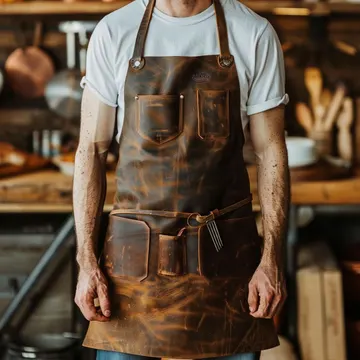
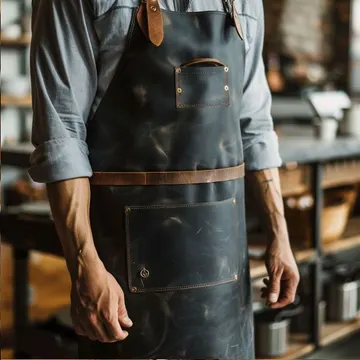
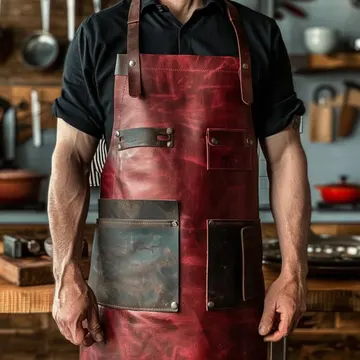
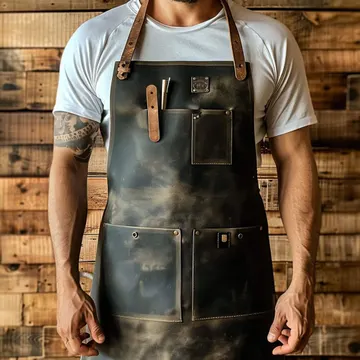
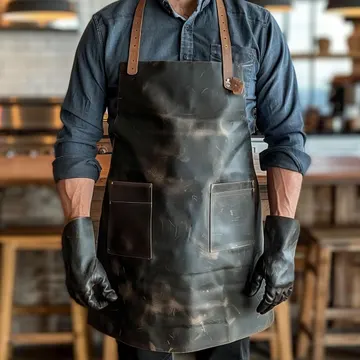
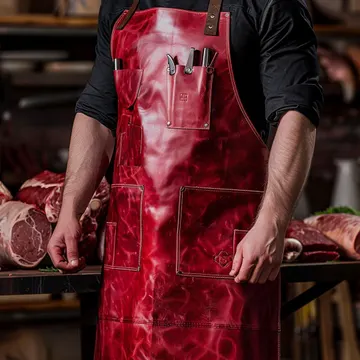
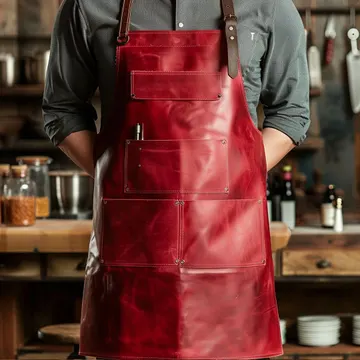
Lapron's leather butcher aprons are built from 1.0–1.4mm 100% genuine cowhide with sturdy brass accents, adjustable belts, and spacious pockets — designed to withstand blades, meat splatter, and daily butchery work. The collection features 7 styles including the Brisket Boss, Meat Artisan, and Red Prime Cut, with easy-clean leather and antique buckle detailing that sets professional leather butcher aprons apart.
- Leather
- Full-grain cowhide
- Thickness
- 1.0–1.4mm
- Finish
- Wipe-clean
- Hardware
- Brass buckles & accents
- Straps
- Adjustable neck & waist
- Sizes
- S – 2XL
Buyer's guide
How to choose a butcher leather apron
Heavy cowhide for knife protection
Thick full-grain leather acts as a shield against knife slips, meat splatter, and moisture during the most demanding butchery tasks.
Wipe-clean & odour-resistant
Smooth cowhide wipes down in seconds after a long shift and naturally resists odours, keeping your apron fresh and functional day after day.
Adjustable for long shifts
Adjustable neck and waist straps with brass buckles ensure a snug, personalised fit that stays comfortable through the entire working day.
Antique brass detailing
Cutwork and brass buckle detailing give each butcher apron a distinguished, professional look that reflects pride in the craft.
Leather Butcher Aprons — Heavy-Duty Protection for the Block
Butchery is the trade that asks the most of an apron. Sharp blades moving toward the body, constant moisture, fat and blood, and a hygiene standard that a fabric apron cannot realistically meet without going to the laundry every single day. Thick full-grain cowhide answers all of it: it turns a slipped blade, it does not absorb moisture, and it wipes down to clean in seconds.
Every apron in this collection is cut from heavy full-grain leather with reinforced stitching at the stress points and fully adjustable straps.
How to Clean a Leather Butcher Apron Properly
This is the question that separates a butcher's buying decision from every other trade, so it is worth being specific.
- End of every shift: wipe the surface down with a damp cloth. Fat and blood come off a smooth hide easily if you do not let them dry on.
- Weekly: a mild soap solution on a cloth, wiped off immediately. Do not saturate the leather.
- Never: machine wash, soak, steam clean, or use bleach or solvent-based sanitiser directly on the surface. These strip the oils and the leather goes hard and cracks.
- Every few months: a light leather conditioner keeps it supple, especially if the apron spends time in a cold room.
- Drying: always at room temperature, hung, never near a heater.
A leather apron that gets this treatment outlasts a decade of fabric ones.
Cut Protection and the Cold Room
Heavy cowhide will turn a glancing blade in a way that cotton will not — it is not chainmail and it is not a substitute for a mesh apron where one is required, but for everyday boning and breaking it adds a real layer between a slipped knife and your body. In a cold room, leather also does something fabric cannot: it stays dry against you instead of holding moisture and pulling heat out of your body across a shift.
Colours — and Why Butchers Choose Red
Red and dark brown are the traditional butcher colours for a practical reason: they carry the day's work without looking neglected the way a pale apron does by mid-morning. Black hides the most. Our red butcher aprons are the closest thing this trade has to a signature, and they photograph well in a counter-facing shop where the customer can see you work.
Beyond the Butcher Shop
The same apron handles game processing, home butchery and breaking down whole animals for a smoker, as well as fishmongering and general wet-work in a commercial kitchen. If you are cutting meat in any volume, this is the right category regardless of whether it is your job or your weekend.
Questions Butchers Ask
Is a leather apron food-safe?
Leather is a non-porous working surface once finished, and it wipes down to visually clean far faster than fabric. It is an outer protective layer, not a food-contact surface — check your local food-safety requirements for what your premises specifically requires.
Will it hold odours?
Far less than fabric. Smells sit on the surface and wipe away rather than soaking into a weave. The common complaint about cotton butcher aprons is exactly this and it is the main reason people switch.
How long does one last?
With the cleaning routine above, years rather than months. The leather darkens and softens with use; the stitching and rivets are the parts that define the working life, which is why both are reinforced.
What length should I order?
Most butchers want full-length — knee coverage matters when you are at a block. Measure chest and collarbone-to-knee and check the size guide.
Related reading from the Academy
Explore other trades
4.8 / 5
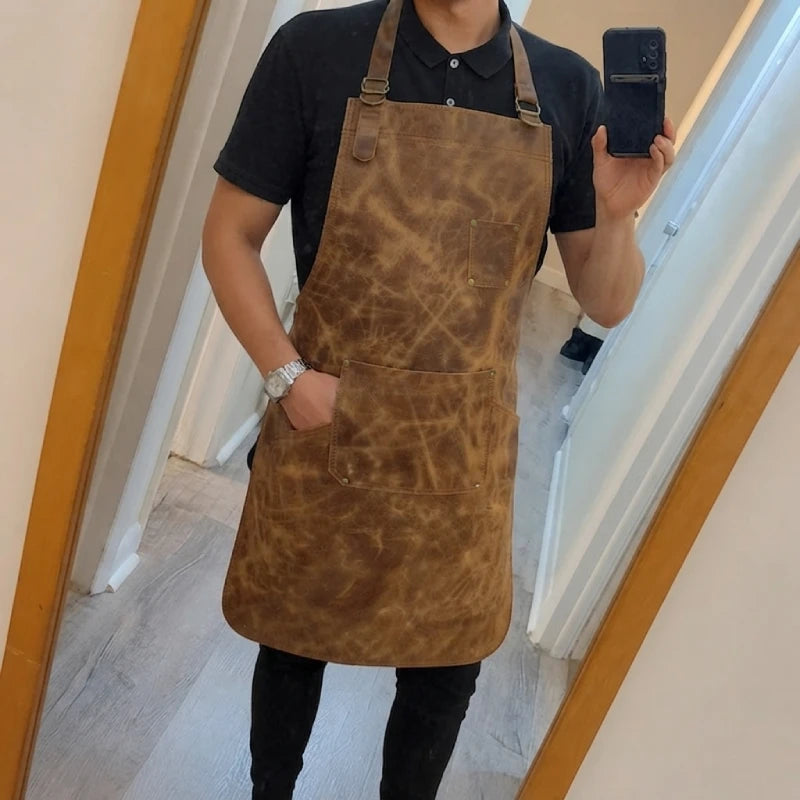 Victor NguyenReally happy with the fit on this one. The distressed tan leather has such a nice worn-in look right out of the box. Front pocket is deep enough for small tools, and the adjustable neck strap made dia...Show more003/07/2026
 Nate FerreiraWore this out on a night off just because it looks that good, not even for work! Sleek black leather with two roomy front pockets, definitely gets noticed. Feels durable enough for actual bar shifts t...Show more019/11/2025
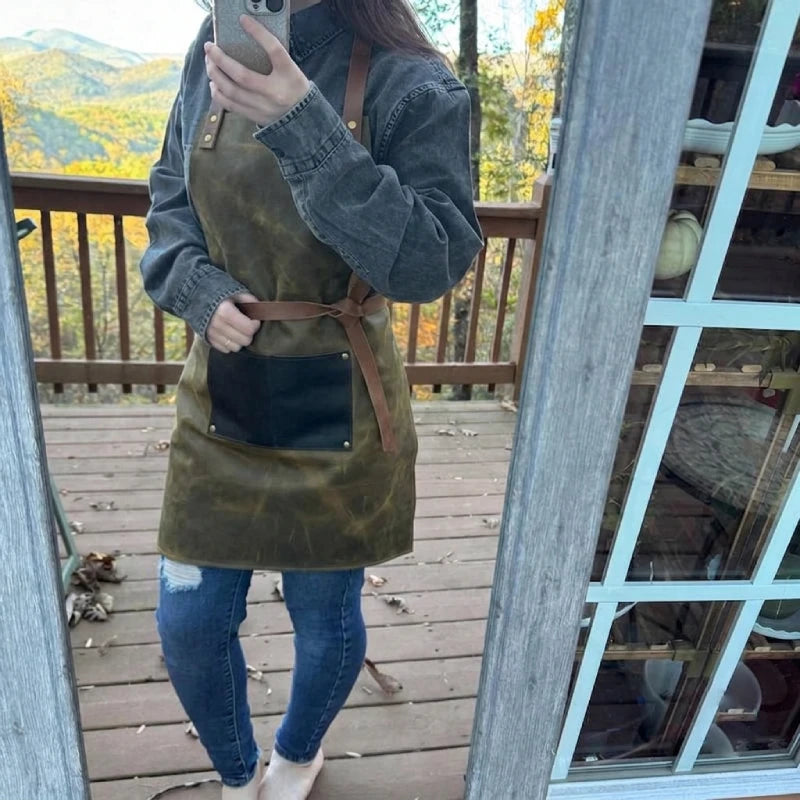 Sierra LockhartLove this one for barbering — the olive canvas body is lightweight and breathable for long days on my feet, and the black leather pocket holds my shears and comb securely. The waist tie lets me cinch ...Show more019/11/2025
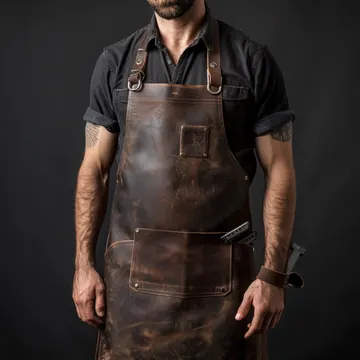
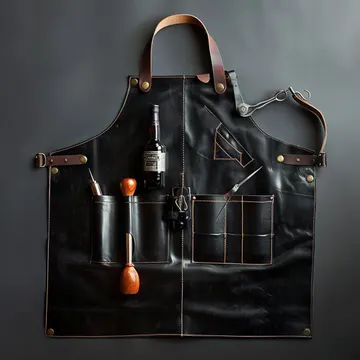
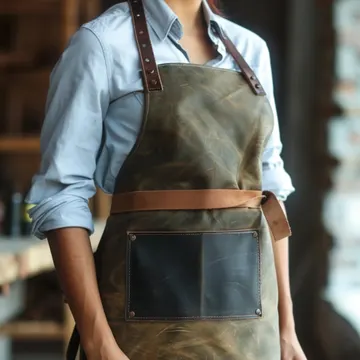
Collection FAQs
Questions buyers ask
The best material for a butcher apron is heavy-duty leather. It naturally resists cuts, stains, water, and meat debris while being easy to wipe clean — Lapron's butcher aprons are made from 100% genuine cowhide for exactly these reasons. As a trusted leather apron shop, we build every apron to handle the toughest kitchen and butchery tasks.
Wipe the apron with a soft cloth dampened with lukewarm water and a mild soap. Gently massage across the surface, rinse with a clean damp cloth, then pat dry and air-dry away from direct heat or sunlight to prevent cracking.
Consider your height and waist size, then refer to Lapron's size guide. All butcher aprons feature adjustable neck and waist straps to provide a comfortable, secure, custom fit.
Lapron's butcher aprons are made from thick cowhide leather that provides significant resistance against cuts and knife slips. While not certified cut-resistant, the heavy leather construction offers meaningful protection during meat cutting tasks.