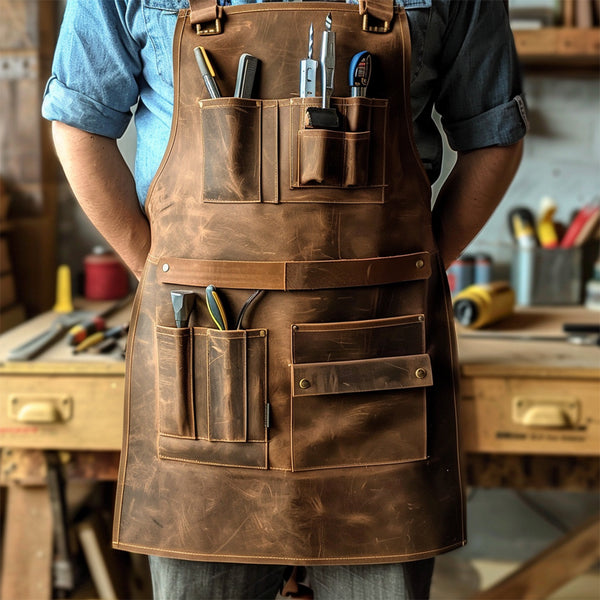
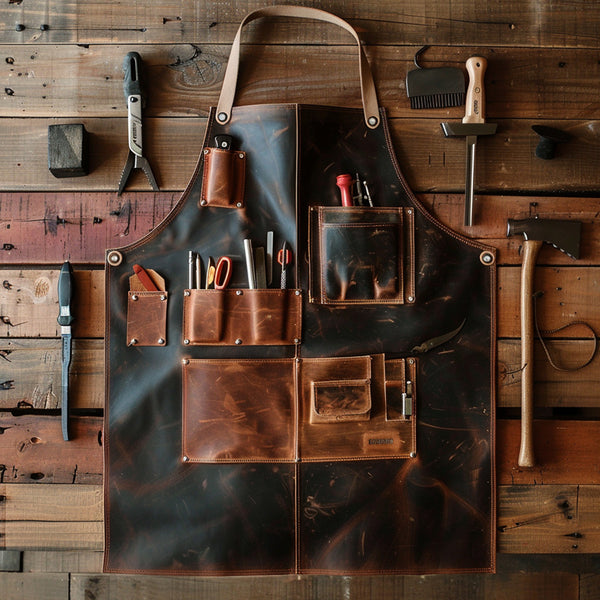
Leather aprons have been used for centuries as protective workwear. Craftsmen, laborers, and tradespeople wore them to protect themselves and their clothing from heat, sharp tools, dirt, and heavy wear. Because leather is durable, heat-resistant, and long-lasting, it became one of the most practical materials for work aprons.
The Earliest Origins of Aprons
The idea of wearing an apron is very old. In ancient civilizations, aprons were used both as practical garments and as ceremonial clothing.
Some of the earliest known depictions of aprons appear in ancient art. Historical references connect apron-like garments to places such as Minoan Crete, Egypt, Assyria, China, and Central America. In these early societies, aprons were not always made solely for labor. In some cases, they also carried symbolic, religious, or social meaning.
Over time, however, aprons became strongly connected with everyday work. As human labor became more specialized, workers required clothing that protected them from dirt, friction, heat, and sharp tools. Leather naturally became one of the best materials for this purpose because it was thick, durable, and long-lasting.
Why Leather Became the Ideal Material
Leather became a preferred material for aprons because it offered protection that ordinary fabric could not provide. It helped shield the body and clothing from heat, sparks, cuts, moisture, dirt, and rough working conditions. Leather was also highly durable, lasting much longer under heavy use, and it became more flexible and comfortable over time. These qualities made custom leather aprons ideal for workers dealing with fire, metal, sharp tools, and demanding manual labor.
Leather Aprons in the Middle Ages
The leather apron became especially common during the Middle Ages. At this time, it was widely worn by tradesmen and craftsmen, so much so that workers were sometimes referred to as “apron men.”
These aprons were commonly associated with occupations such as blacksmiths, carpenters, masons, shoemakers and cobblers, butchers, bakers, barbers, brewers, laborers, and other manual workers.

In an age before industrial machines, much work was done by hand. Jobs were often dirty, physically demanding, and dangerous. A leather apron helped protect the front of the body from sparks, tools, dust, stains, and everyday wear.
For blacksmiths, the leather apron was especially important. It guarded against flying sparks, hot metal, and rough contact with tools and work surfaces. For butchers and cobblers, it protected both clothing and the body during repetitive, messy, or blade-heavy work. For masons and carpenters, it added a tough layer against friction and impact.
In this period, the leather apron was not fashionable. It was essential work gear.
Special Historical Use: The Miner’s Leather Apron
One of the most interesting examples in leather apron history is the miner’s leather apron, used in the mining regions of German-speaking Europe.
This apron was different from the standard front apron. It was worn behind the body and served as a protective piece for miners working underground. It helped prevent the seat of the trousers from wearing out, protected against cold and moisture when sitting, and helped during movement inside the mine. It was also useful when entering inclined mine shafts and could reduce some of the shock and vibration miners experienced.

This mining apron appears to have been introduced into German mining areas in the 15th century, likely from the Slovakian mining region around Banská Štiavnica. Early illustrations of it appear in mining texts and religious artwork from the early 1500s. Later, it became more than just workwear. It also developed into a symbol of mining identity and was used in ceremonial uniforms and mining traditions.
This shows that leather aprons were not all the same throughout history. Different professions adapted them to meet their own practical needs.
Leather Aprons in the Renaissance and Early Modern Period
As Europe moved into the Renaissance and early modern period, leather aprons remained closely linked to skilled manual labor. During this time, craftsmanship and trade identity became even more important.
Aprons did more than protect clothing. They also began to represent a person’s profession, experience, and working life. In many trades, seeing the apron was enough to recognize the worker.

Historical references from literature, wills, inventories, and illustrations show that aprons were common among working men in many occupations. Some were made of leather, while others were made of canvas or other fabrics, depending on the trade. Leather was usually chosen for heavier, rougher, or more dangerous work.
This period helped strengthen the image of the leather apron as a mark of the maker, craftsman, and laborer.
Leather Aprons During the Industrial Revolution
The Industrial Revolution increased the demand for leather aprons as workers in factories, foundries, and workshops faced hazards such as machinery, heat, metal splashes, sharp tools, and heavy wear. Protective clothing became more important, and leather aprons remained widely used because they could withstand harsh industrial conditions. During this time, apron designs also improved, with longer coverage, stronger straps, and reinforced areas, making them more practical for industrial work as well as traditional trades.
The Main Trades That Used Leather Aprons
Throughout history, leather aprons were used in many professions, but a few trades are especially important in their story.
Blacksmiths and Metalworkers
Blacksmiths are among the most strongly connected to leather aprons. They needed protection from sparks, heat, hot metal, and flying debris. Leather provided a thick barrier that could handle extreme workshop conditions.
Cobblers and Shoemakers
Shoemakers and cobblers frequently wore leather aprons because their work involved constant contact with leather, tools, benches, and sharp objects. The apron protected both clothing and the body.
Butchers
Butchers used aprons to protect against stains, moisture, and cuts. In messy and physically demanding work, leather offered strong and lasting protection.
Masons, Carpenters, and Woodworkers
Workers in building and woodworking trades benefited from leather aprons because they resisted abrasion and helped guard against tools, splinters, and rough materials.
Miners
As mentioned earlier, miners used a special form of leather apron that served a unique protective purpose underground.
Barbers, Brewers, and Other Tradesmen
Historical records also show aprons used by barbers, brewers, vintners, bakers, and street vendors. Not all of these aprons were leather, but in harder or dirtier forms of work, leather remained a preferred choice.
How Leather Aprons Changed Over Time
Although the basic purpose of a leather apron stayed the same, the design evolved over the centuries.
Early leather aprons were often simple. Many were made from a single piece of hide and tied around the waist. As working needs changed, designs became more specialized.

Over time, leather aprons began to include:
-
bib-style full front coverage
-
neck loops or shoulder straps
-
cross-back straps for better weight distribution
-
pockets for tools and small items
-
reinforced stitching
-
lighter or softer leather in some trades
-
heavier and thicker leather in high-risk jobs
This evolution made leather aprons more comfortable and better suited to specific professions while keeping their protective function.
Leather Aprons in the Modern Age
Today, leather aprons are widely used in both traditional and modern professions. They remain important in heavy-duty fields like welding, blacksmithing, metalwork, woodworking, glassblowing, and butchery, where they protect against heat, sparks, and sharp tools. They are also popular in modern roles such as chefs, baristas, bartenders, barbers, leatherworkers, tattoo artists, and craftsmen, valued for both protection and their professional appearance.
Why Leather Aprons Are Still Popular Today
Leather aprons remain popular not only for their history but also for their practical benefits. They are highly durable and can last for years, even with regular use. Leather also provides strong protection against heat, sparks, dust, friction, and minor cuts. Over time, the material softens and becomes more comfortable to wear. In addition, leather aprons offer a classic professional appearance and long-term value, making them a reliable choice for many workers and craftsmen.
Leather Aprons as a Symbol of Craftsmanship
One reason leather aprons remain so attractive is that they represent more than protection. They also represent craft, pride, and skilled work.
Historically, the leather apron was associated with people who made things by hand. It was worn by blacksmiths, masons, shoemakers, miners, and other tradesmen whose work required discipline and practical skill.
That same image continues today. Whether worn in a forge, workshop, kitchen, or café, the leather apron still suggests a connection to careful work and traditional craftsmanship.
Final Thoughts
The history of leather aprons is the story of practical workwear that stood the test of time. From ancient apron-like garments to medieval tradesmen, from miners and blacksmiths to modern makers and professionals, leather aprons have remained useful because they solve real problems.
That is why leather aprons have survived for centuries while many other work garments have changed or disappeared. Their design may have improved, and their uses may have expanded, but their core purpose remains the same: to support people who work with their hands.
This article is authored by Shahzada Umer Farooq.