
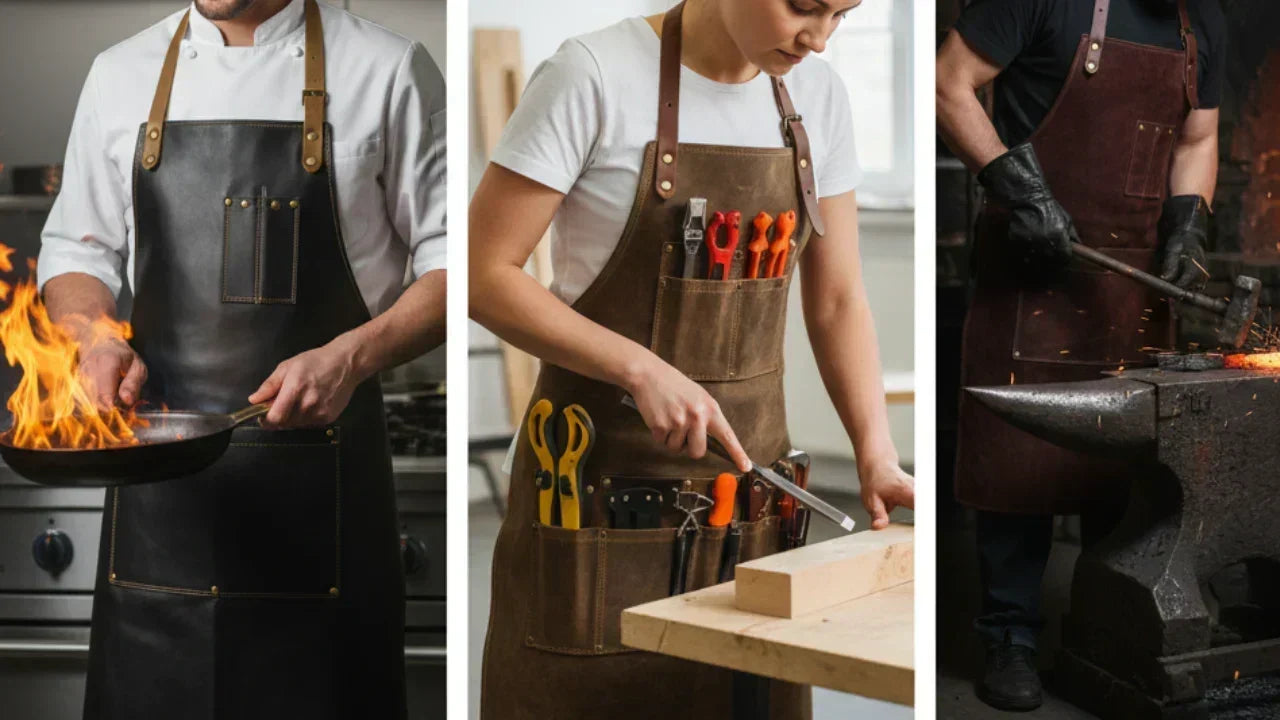
How to Choose the Right Leather Apron for Your Work?
When it comes to selecting the perfect leather apron, the options can seem overwhelming. Aprons provide durability, protection, and style for various professions and hobbies. Whether you're a chef, woodworker, blacksmith, or crafter, choosing the right apron can greatly enhance your comfort, safety, and performance. In this detailed guide, we'll help you understand the key factors to consider when choosing a leather apron for your needs.
Determine the Purpose of Your Leather Apron
The first step in choosing the right apron is understanding its purpose. Different tasks require different features, so it's important to select an apron that suits the specific job you do. Here are some common uses:
For Cooking and Baking
- Leather Type: A lightweight leather (3-4 oz) works best for kitchen aprons. It protects hot surfaces, spills, and stains while maintaining flexibility and breathability.
- Key Features: Adjustable neck straps and waist ties for a good fit, along with a pocket for tools or a phone.
- Why It’s Important: A cooking apron protects you while you work, adding a professional touch to your kitchen.
- If you want to explore relevant leather cooking aprons, you can find them on our collection page.
For Welding and Blacksmithing
- Leather Type: A heavier leather (7-9 oz), such as buffalo or full-grain leather, is essential for welding or blacksmithing. It provides superior heat resistance and durability.
- Key Features: Cross-back straps for better weight distribution and comfort, reinforced areas for protection, and a longer apron for full-body coverage.
- Why It’s Important: A heavy-duty leather apron is crucial for protection against high heat, molten metal, and sparks.
- Check out our collection of Leather welding aprons for maximum protection and durability.
For Woodworking and Carpentry
- Leather Type: Medium-weight leather (4-6 oz) is ideal for woodworking aprons, offering a balance between comfort and protection against wood chips, sawdust, and minor abrasions.
- Key Features: Large pockets for tools, a secure waist strap, and a comfortable fit to allow for movement.
- Why It’s Important: A good woodworking apron shields you from the wear and tear that comes with using sharp tools and dealing with debris.
Explore our collection of woodworking leather aprons designed for practicality and comfort.
For Leatherworking and Crafting
- Leather Type: Flexible and durable leather (4-6 oz) is best for crafting and leatherworking aprons.
- Key Features: Multiple pockets for tools and a snug, comfortable fit.
- Why It’s Important: Aprons in this field need to protect against scratches and cuts from tools, while allowing for detailed work.
Choose the Right Leather Type and Thickness
Choosing the right leather type and thickness is crucial for determining the apron’s protective qualities, comfort, and weight. Here’s a breakdown of different leather types and thicknesses to help you make the best decision:
Leather Types:
a) Full-Grain Leather
- Characteristics: The strongest and most durable leather type, which ages beautifully and develops a rich patina over time.
- Best For: Heavy-duty tasks like welding or blacksmithing.
- Why It’s Ideal: Full-grain leather aprons offer maximum protection and durability, making them perfect for high-risk environments.
b) Top-Grain Leather
- Characteristics: Softer and smoother than full-grain leather, but still highly durable. It offers a balance of flexibility and strength.
- Best For: General use, such as cooking, crafting, or woodworking.
- Why It’s Ideal: Combines comfort with durability, making it suitable for everyday tasks.
c) Split-Leather
- Characteristics: More affordable but less durable than full-grain or top-grain leather.
- Best For: Lighter tasks like light crafting or gardening.
- Why It’s Ideal: It’s budget-friendly but offers reasonable protection and durability.
d) Buffalo Leather
- Characteristics: Thick, durable, and tough, providing excellent protection.
- Best For: High-heat environments, like welding or heavy industrial tasks.
- Why It’s Ideal: Buffalo leather aprons are known for their resistance to wear and heat, making them ideal for high-risk, high-heat work.
Leather Thickness:
The thickness of the leather impacts its durability, weight, and flexibility. Leather thickness is typically measured in ounces (oz).
a) 3–4 oz (1.2-1.6 mm)
- Best For: Cooking, crafting, and light shop work.
- Why It’s Ideal: Lightweight and flexible, perfect for ease of movement.
b) 4–6 oz (1.6-2.4 mm)
- Best For: Woodworking, general tasks, and crafting.
- Why It’s Ideal: A middle ground, offering a good balance of protection and comfort.
c) 7–9 oz (2.8–3.6 mm)
- Best For: Welding, blacksmithing, and high-heat environments.
- Why It’s Ideal: Provides heavy-duty protection, ideal for jobs involving heat and sparks.
Pay Attention to the Apron’s Fit and Comfort
Comfort is essential for any leather apron, especially if you plan to wear it for long hours. A well-fitting apron not only helps reduce fatigue but also enhances safety.
Strap Design
- Neck straps: Adjustable neck straps ensure comfort and prevent neck strain.
- Cross-back straps: Distribute weight evenly, ideal for heavy-duty aprons, reducing neck and back fatigue.
- Waist straps: Adjustable waist ties help secure the apron for a custom fit.
Apron Length
- Full-Length Aprons offer comprehensive protection, covering the chest, torso, and knees—ideal for high-risk tasks.
- Waist Aprons provide more mobility and are often preferred for cooking or crafting, where full coverage isn’t required.
- Fit: Ensure the apron allows for a full range of movement, particularly in the arms and knees.
Breathability
-
Leather isn’t the most breathable material, but some aprons come with split or ventilated panels to improve airflow, making them more comfortable for long wear.
Consider Apron Features and Functionality
The right real leather apron should enhance your workflow. Consider the following features to make your apron more functional:
Pockets and Tool Loops
- Multiple pockets are essential for holding tools, phones, or other items you need frequently.
- Tool loops allow you to hang tools like hammers or pliers, keeping them within reach as you work.
Reinforced Areas
-
Look for aprons with reinforced stitching in high-stress areas like the neck, waist, and straps. This increases the durability of the apron and makes it more resistant to wear and tear.
Budget Considerations
When choosing a leather apron, it’s important to balance your budget with the quality you need. Full-grain and top-grain leather aprons are typically more expensive but offer superior durability and longevity. In contrast, aprons made from split leather or synthetic leather tend to be more affordable but may not last as long.
Sustainability and Ethical Considerations
If sustainability is a priority for you, consider choosing vegetable-tanned leather. This eco-friendly method uses natural tannins and avoids harmful chemicals, making it a great choice for those seeking more sustainable leather options.
Conclusion
Choosing the right leather apron depends on your specific needs and the type of work you do. Whether you need protection for heavy-duty tasks or a lighter, more comfortable option for everyday use, the right apron can provide durability, protection, and style. Consider the leather type, thickness, fit, and additional features like pockets and straps to ensure you choose the perfect apron for your needs.
By evaluating these factors carefully, you’ll find a leather apron that offers the right balance of protection, comfort, and functionality, helping you stay safe and efficient in your work.
This article is authored by Shahzada Umer Farooq.